PhosPrint completes multi‑country technical visit with successful GEN1 bioprinter installation in Germany
In March 2026, PhosPrint visited ReGEN Biomedical (Maastricht, Netherlands) and DWI Leibniz Institute for Interactive Materials (Aachen, Germany) partners to advance technical collaboration within the NEOLIVER project. These on‑site exchanges strengthened cross‑partner cooperation and supported significant progress on the NEOLIVER bioprinting platform, with the successful installation of the GEN1 bioprinter at DWI standing out as a key milestone.
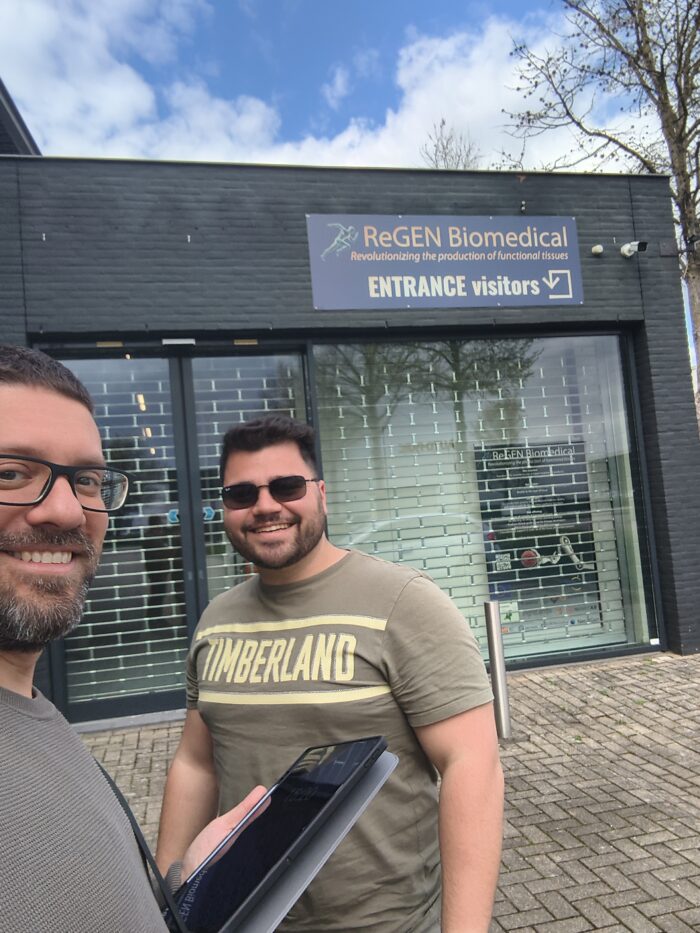
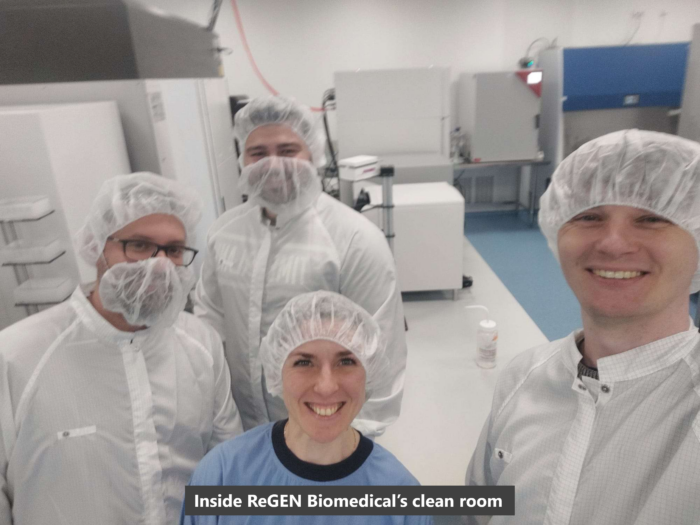
The first stop took place at ReGEN Biomedical, where the focus was on preparing for the future integration of the GEN2 bioprinter into ReGEN’s cleanroom facilities.
The visit included a guided tour of the cleanroom environment and a detailed review of the installation workflow, covering unboxing, pre‑assembly in a semi‑clean area, functional checks, and final cleanroom transfer using a dedicated “clean” pallet‑jack pathway.
Technical discussions addressed mounting configurations—either bench‑based or supported by custom legs—and the interface requirements for vascularized substrate insertion, essential for ensuring compatibility with downstream components of the NEOLIVER platform.
A modular strategy for the automated feeder was also explored, allowing the GEN2 bioprinter to begin operation in manual mode while the automation module is further developed.
The visit then continued at DWI – Leibniz Institute for Interactive Materials in Aachen, Germany, where a major milestone for the NEOLIVER project was achieved with the successful installation and commissioning of the GEN1 bioprinter. This second visit focused on the on‑site deployment of the system and hands‑on training, enabling DWI to operate the bioprinter directly within its laboratory facilities.
The PhosPrint team completed the unboxing, assembly, and functional verification of the GEN1 bioprinter on its dedicated laboratory workbench, bringing the system into full operation. The successful installation represents an important step forward for the project, marking the transition from system development to practical use by NEOLIVER partners.
During the visit, DWI researchers received comprehensive training on the operation of the GEN1 system for spheroid‑based bioprinting. Having the bioprinter permanently installed on‑site allows the team to independently optimize key printing parameters while streamlining experimental workflows.
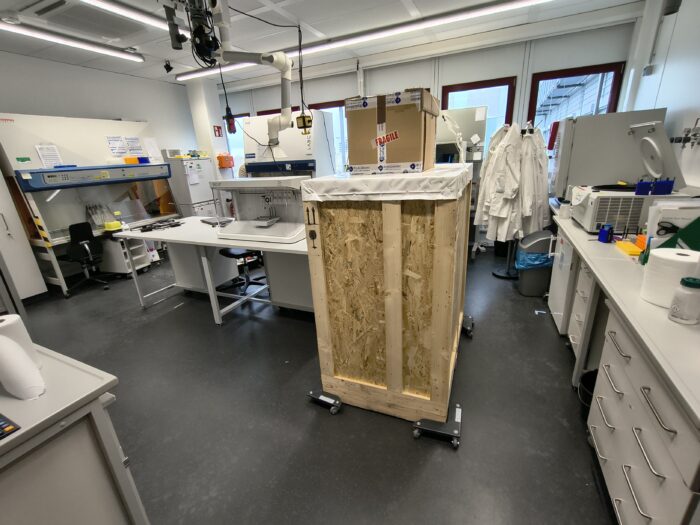
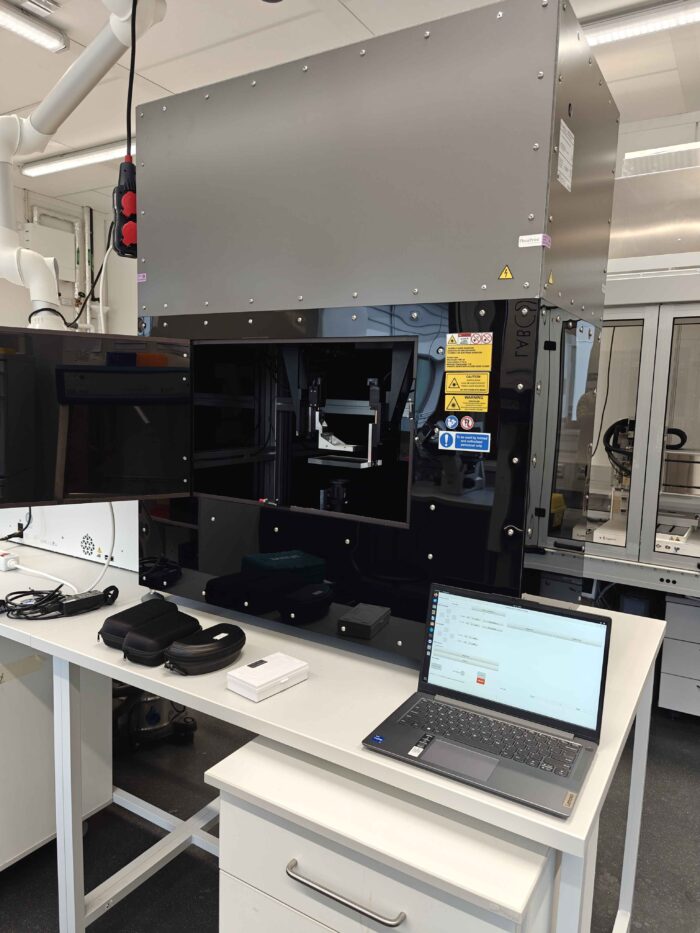
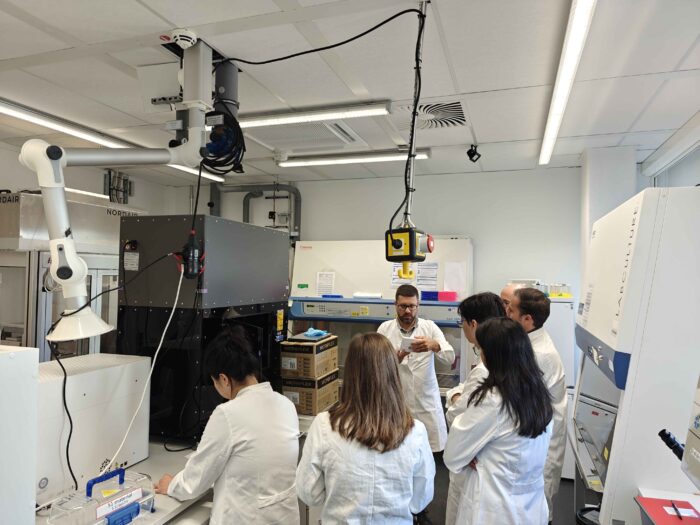
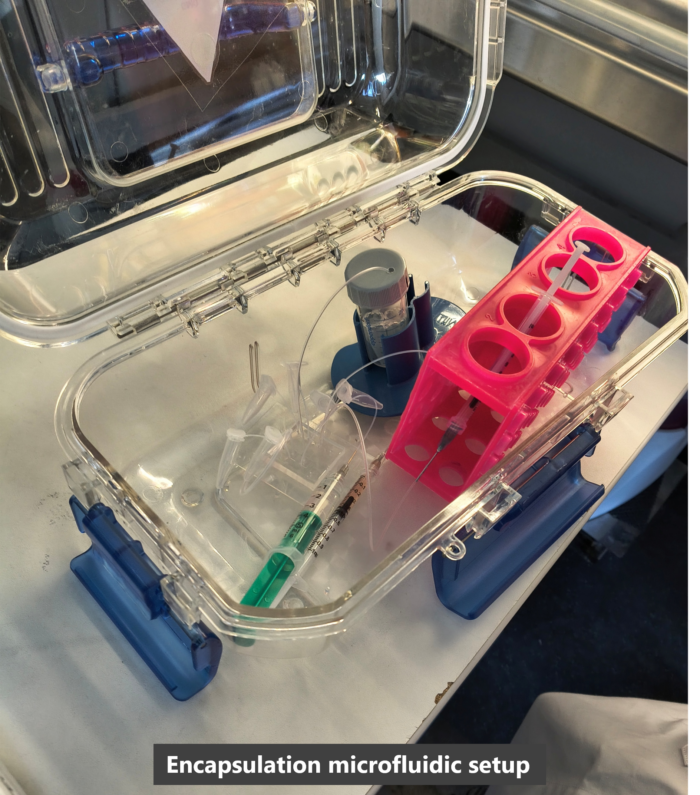
A dedicated spheroid encapsulation workshop further strengthened the technical exchange between partners.
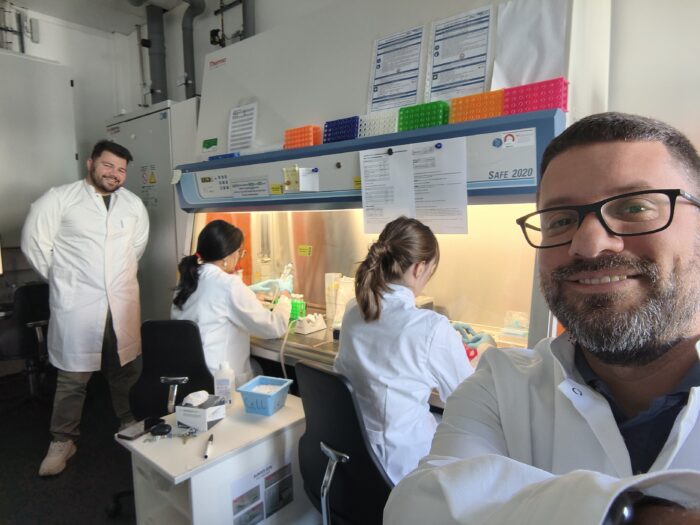
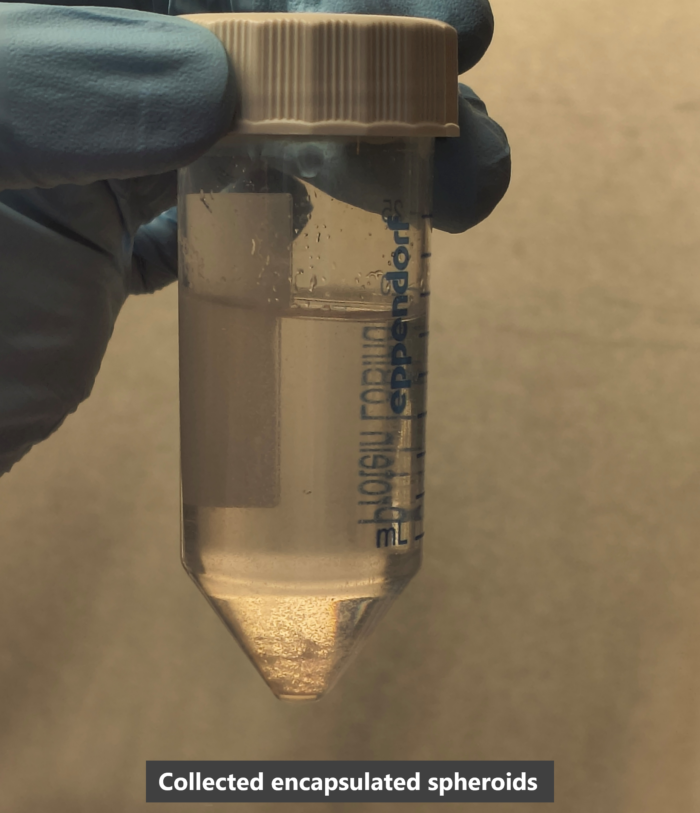
The session showcased the complete production workflow, providing an overview of the key steps involved in spheroid processing for bioprinting applications. This included harvesting from culture plates, microfluidic encapsulation, and subsequent cleaning and UV‑based cross‑linking processes.
The hands‑on nature of the workshop allowed participants to closely observe critical handling procedures and technical parameters, fostering a shared understanding of the requirements for reliable spheroid‑based biofabrication. The knowledge exchanged during these sessions supports the continued refinement of bioprinting workflows within the NEOLIVER framework.